
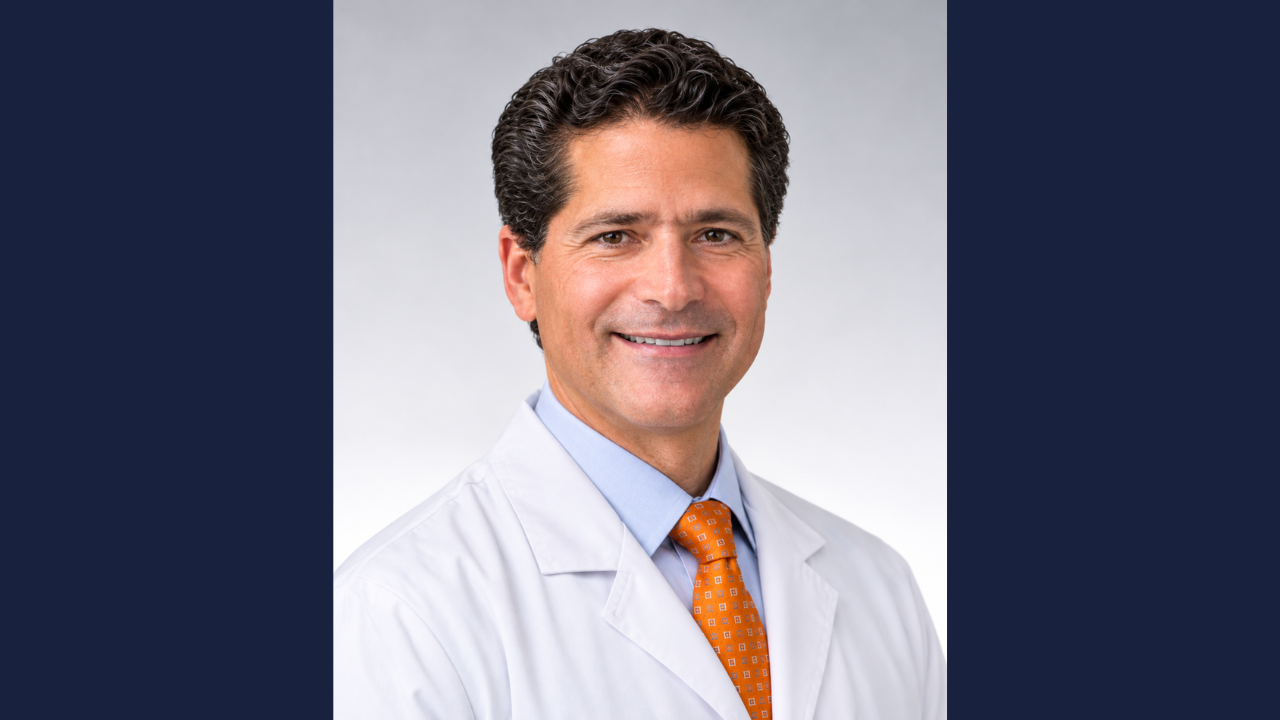
“This study underscores the critical role of prehabilitation in improving frailty and survival outcomes in patients with ESLD [end-stage liver disease] awaiting LT,” wrote study author Andres Duarte-Rojo, MD, PhD, a transplant hepatologist and professor of organ transplantation, gastroenterology, and hepatology at Northwestern University Feinberg School of Medicine, and colleagues. “By incorporating frailty assessments and exercise interventions into clinical practice and targeting a specific LFI MCID [minimal clinically important difference] through personalized interventions, patients with ESLD could improve their survival and overall outcomes.”The study evaluated 1,275 LT candidates (59% male; median age, 57 years; median Model for End-stage Liver Disease [MELD] score, 14), who each underwent a baseline functional assessment with a dedicated physical therapist. At baseline, the median LFI was 3.8, the median 6MWT was 336 meters, and the median gait speed test (GST) was 1 m/s, with 23%, 26%, and 29% of the cohort categorized as frail by each metric. After these evaluations, patients received personalized prehabilitation prescriptions based on their functional status, resulting in 1,973 physical therapy visits. A sub-cohort of 355 participants who completed two or more follow-up assessments participated in the prehabilitation program.Among prehabilitation program participants who demonstrated functional gains, the absolute median improvement was -0.39 for the LFI and 54 meters for the 6MWT. Fewer than half of these patients improved their gait speed.Over the study’s longitudinal tracking, 55% of the total cohort (n=667) achieved waitlist placement, 37% (n=462) underwent transplantation, and 26% (n=335) died. Crucially, among prehabilitation program participants, an LFI improvement of at least 0.4 was associated with an approximately 50% reduction in pre-transplant mortality, independent of baseline frailty and disease severity. Improvements in the 6MWT conferred no statistically significant survival advantage.Physician’s Weekly (PW) spoke with Dr. Duarte-Rojo to gain insights into the study’s findings and implications.PW: Why did you feel it important to focus your research on how outpatient prehabilitation can improve frailty in liver transplant?Dr. Duarte-Rojo: We have to address frailty and physical fitness in patients who are candidates for liver transplant because most of the mortality in this population, particularly before transplant, can be explained precisely by frailty or poor physical fitness. A transplant candidate with poor muscle tone, poor physical ability, or a lack of strength is a patient who can die from complications on the transplant wait list or who, after transplantation, number one, is not going to go home—they’re going to be discharged to a rehabilitation facility—and number two, can experience failure to thrive or suffer complications after liver transplantation. Even though it’s less likely than pre-transplant, they can die from these complications after transplant.How do your findings challenge the notion that frailty in liver transplant candidates is largely irreversible?For many years—approximately the last two decades up until a few years ago—most people in the field thought that frailty was non-reversible. People who do rehabilitation such as PM&R [physical medicine and rehabilitation]—exercise professionals, physical therapists, et cetera—know better. They know that when people who are really frail, very debilitated, or even with a disability, are properly trained, they actually improve. The frailest actually improve the most when properly trained. It’s not a matter of who can improve, but what type of exercise or intervention they need, because it’s not only exercise; it’s also nutrition. The question then becomes: what type of personalized, exercise-focused intervention does this patient need to improve?Of course, with some conditions, patients cannot exercise. For example, some patients with neurological conditions cannot exercise. Excluding those exceptions—which, thank God, are few—most people can exercise. It’s just a matter of identifying the right routine for each patient.Your study identified a 0.4-point improvement in the LFI as clinically meaningful. How should transplant programs use this benchmark in practice?We did this study because we needed a metric to tell us, “This patient is okay to proceed with transplantation.” All transplant programs take patients with frailty to the operating room, but we know that those patients are going to do poorly after transplant. We know there will be more complications and more infections, et cetera. We also know that these patients have the highest chance of dying on the transplant wait list. Among those with a liver frailty index of 5 or above, one in four is going to die on the transplant wait list.With this understanding of the risk, if you can get your patient on the proper diet, the proper exercise routine, and the proper mobility protocol, how much do they need to improve for you to say, “This risk is back to baseline or similar to baseline,” or “This patient cannot take this risk and is not going to do well”? That’s why we studied the changes in the LFI. What we found is that it’s precisely the people who have an improvement of 0.4 or more—the ones in whom the risk went from being doubled because of a high LFI to improving by 0.4—whose risk gets cut in half regardless of other risk factors: age, sex, or severity of liver disease. While LFI improvement was strongly tied to better survival, improvement in the 6‑minute walk test wasn’t. What do you think accounts for that difference?For some reason, the liver frailty index is telling us more than the 6-minute walk test.The liver frailty index has been very widely validated. An ongoing NIH-funded consortium study, the Functional Assessment in Liver Transplantation Study (FrAILT), led by Dr. Jennifer Lai, involves 10 to 11 institutions. Northwestern participates in this study, and through it, we have identified the liver frailty index as possibly the most important frailty or fitness parameter in this patient population.So why didn’t the 6-minute walk test, a pretty robust test, provide the same result in terms of finding this minimal difference meaningful for patients to improve and receive transplants? I do not know, but of course we will keep studying this.I do have to say—and this is just pure speculation—that for patients with liver disease, it’s not easy to walk. They have swollen legs, edema, and buildup of fluid in their abdomen, called ascites. These conditions may cause patients to improve less than expected in the 6-minute walk test. Another possible reason is that, in the end, the walk test provides information only about the lower extremities, whereas the liver frailty index is a composite endpoint that addresses both upper and lower extremities. Given that the frailest candidates often show the greatest functional gains, yet certain clinical conditions preclude exercise, which specific liver transplant subpopulations stand to benefit the most from prehabilitation? If there are no contraindications to exercise—musculoskeletal or neurological issues—basically everybody will benefit from prehabilitation. A more recent study from the FrAILT consortium has shown that patients who reach an LFI of 3.6 or lower are likely to benefit most from exercise interventions. So now we have two metrics for transplant programs: improving by 0.4 and getting as close as possible to 3.6.For a patient who starts with a liver frailty index of, for example, 5.5, reaching 3.6 is a long way off, and waiting until you reach that endpoint for the patient to receive the transplant would be irresponsible. This is where the 0.4 provides an in-training metric that lets you say, “This patient is going to do okay with transplant.” That’s what we do here at Northwestern. Patients who have been denied transplant at other institutions in the country—for example, a patient who comes to us with a 5.5 liver frailty index—we take them, we train them, and we get them to 5.1, the minimum improvement. That’s when we say, “Okay, this patient is going to do well with liver transplantation.” Our experience over the last couple of years, since we started our prehabilitation program here at Northwestern, has supported this approach. Despite growing evidence, including yours, relatively few transplant centers offer structured prehabilitation. What are the biggest barriers to broader adoption?Insurance or third-party payers. The issue is that the healthcare system does not recognize liver transplant prehabilitation as relevant. Unlike cardiac and lung transplantation, where they can refer patients for cardiac and pulmonary rehabilitation, we don’t have a straightforward way to physically prepare liver and kidney transplant patients. It’s just not recognized by the healthcare system. Can we try to go around the healthcare system to find a way for these patients to get that exercise? Yes, but there’s friction because of barriers we, as a healthcare system and as a society, have imposed.At Northwestern, we received a generous donation from a Chicago resident, so through philanthropy and by organizing our own resources, we created our prehabilitation program. But it’s not easy for just any transplant center to develop such a program. Even if the expertise is there, it’s often not financially feasible. We’re working on that. Beyond liver transplantation, where do you see the greatest opportunity to apply prehabilitation programs in routine clinical care?Prior to oncological or chronic liver disease surgery, we frequently perform a TIPS procedure—a transjugular intrahepatic portosystemic shunt. A new study shows that patients who exercise before TIPS do much better. We have similar evidence in liver cancer and many other conditions, and certainly for the geriatric population facing surgery. So, there is tons of information out there, but for whatever reason, we, as a healthcare system, haven’t organized it to provide timely prehabilitation. I really hope that as these studies continue to be published, awareness will increase, and that eventually we’ll have the financial means within the healthcare system to offer prehabilitation to anyone facing a transplant or surgery who falls short of their expected physical fitness, or simply to anyone not at their recommended level of physical activity. Mobility is ridiculously important to preventing disease and aging properly.Is there anything else you’d like your peers to know regarding your research or prehabilitation in general?As physicians, when we identify transplant candidates with frailty, we should not view that as a contraindication for transplantation. Instead, we should treat it as an indication for prehabilitation—an opportunity to provide proper conditioning, build strength, and improve mobility to the level these patients need for a successful transplant journey.ContributorAndres Duarte-Rojo, MD, PhDTransplant HepatologistProfessor, Gastroenterology and Hepatology; Organ TransplantationNorthwestern University Feinberg School of Medicine Disclosure: Andres Duarte-Rojo, MD, PhD, has disclosed no relevant financial relationships. This transcript has been edited for clarity. Any views and opinions expressed are those of the author(s) and/or participants and do not necessarily reflect the views, policy, or position of Physician’s Weekly, its employees, and affiliates.
Source link
Q&A: Liver Transplant Prehabilitation Boosts Frailty Metrics & Survival
1