
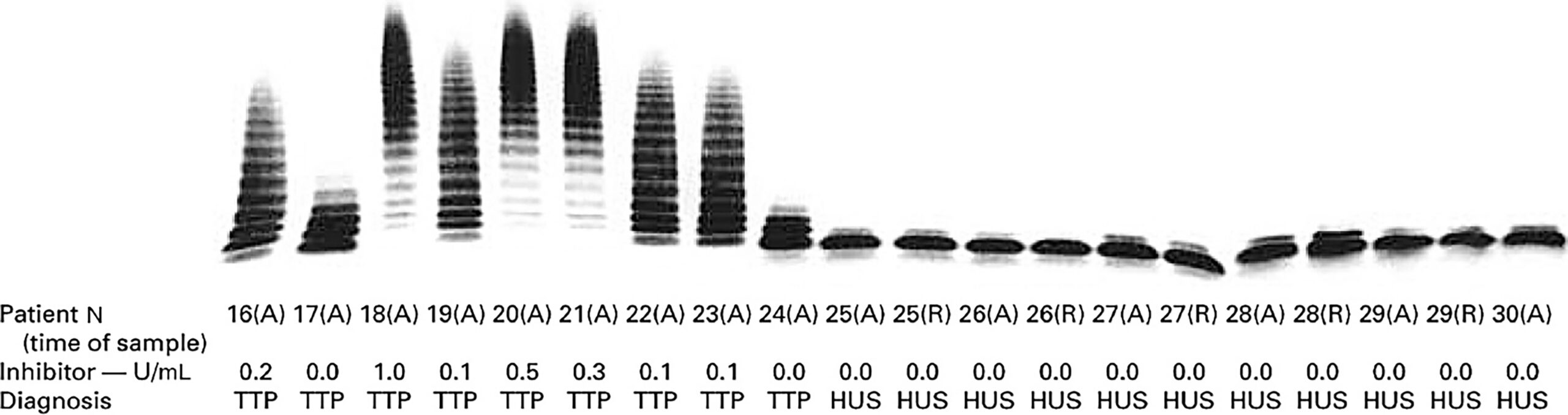
Summary of Thrombotic Thrombocytopenic Purpura (TTP) Findings
A landmark study by Furlan et al. has significantly advanced the understanding of thrombotic thrombocytopenic purpura (TTP) and its differentiation from hemolytic-uremic syndrome (HUS). The research, published in The New England Journal of Medicine, confirms that von Willebrand factor cleaving protease (vWF CP), now known as ADAMTS 13, is crucial in distinguishing these two conditions.
The study involved 53 patients and utilized a multimeric assay alongside routine plasma analysis to evaluate the presence of antibodies against vWF CP. Key findings showed that patients with non-familial TTP exhibited severe deficiencies of vWF CP, while HUS patients displayed normal levels. Additionally, 20 of 24 patients with TTP had specific inhibitors, further elucidating the autoimmune nature of some cases.
These advancements underscore the importance of precise diagnostics in clinical practice, enhancing treatment pathways and the time to remission through improved monitoring and therapeutic strategies, such as caplacizumab and immunosuppression. The ongoing research into ADAMTS 13 not only facilitates better outcomes for patients but reinforces the evolving nature of hematopoietic cell transplantation and its applications in managing severe hematologic disorders.

Such findings are critical in shaping clinical guidelines and public health policies regarding both diagnostics and treatment approaches, ultimately improving donor and recipient outcomes in hematologic transplantation practices.
Source: haematologica.org